
Reviewed · HEMINGWAY & OLD TOWN HISTORY WALKS
Key West Historic Bahama Village & Hemingway Heritage
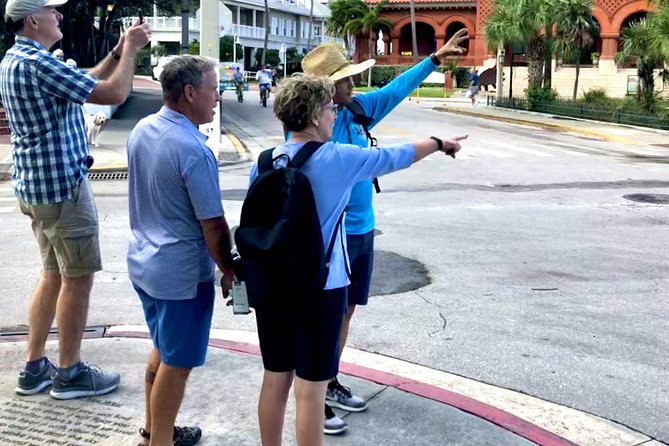
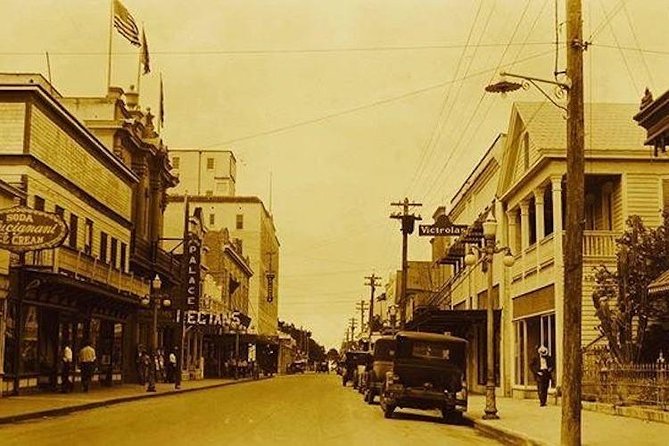
Key West has a second story beneath Duval. This 90-minute walk through the Historic District connects Bahama Village and Key West’s broader identity with real street-level landmarks, and it’s guided by locals. I love the small-group pace (up to 12), which keeps questions easy, and I love how guides like AJ and Alejandro use historical photos on a tablet to make architecture and neighborhoods click.
One possible drawback: you’re walking about 1.4–1.8 miles in warm weather, and there are no restrooms on the tour. Plan your timing and water so the heat doesn’t steer the day.
In This Review
- Key West in 6 highlights before you go
- A 90-minute walk that explains Key West’s personality
- Meeting at 716 Duval and finishing near Mary Ellen’s
- Conch Republic: why Key West calls itself different
- Bahama Village stories you can actually use while walking
- The pool stop: one landmark detail that changes how you picture the island
- A tall maritime landmark since 1825: ships, trade, and architecture
- Green Parrot Bar on Duval: from grocery store to dive-bar legend
- What makes this tour work: the guide, the pace, and the Q&A
- Distance, heat, and comfort tips that keep it enjoyable
- Value check: is $46.99 worth it?
- Who should book this tour (and who might skip it)
- Should you book Key West Historic Bahama Village & Hemingway Heritage?
- FAQ
- How long is the tour?
- How much does the tour cost?
- Where does the tour start?
- Where does the tour end?
- What’s included in the tour price?
- Is food, drinks, or restroom access included?
- What are the walking and weather requirements?
Key West in 6 highlights before you go
- Max 12 people means you actually hear the stories, not just the guide’s voice.
- Tablet-supported history turns buildings, street names, and old bars into clear context.
- Conch Republic basics: learn why Key West got that nickname and who a Conch is.
- A property pool story: you’ll hear why one of the biggest pools on the island became part of local lore.
- A tall maritime landmark dating to 1825 gives you a real sense of island shipping and architecture.
- Green Parrot Bar history (since 1890): from grocery store to one of Key West’s best-known dive-bar stops.
A 90-minute walk that explains Key West’s personality
If you only roam the main streets, Key West can feel like a highlight reel. This tour slows you down and helps you understand why the place looks the way it does, and why the people who built it left such strong fingerprints.
The format matters for your day. You’re not on some marathon route. You’re getting a guided pass through the Historic District, plus the kind of behind-the-street context that makes your future self-guided stroll better. When the guide points out architecture, street patterns, and neighborhood shifts, you start seeing clues that you would normally miss.
More of Old Town from Hemingway to the seaport



Meeting at 716 Duval and finishing near Mary Ellen’s
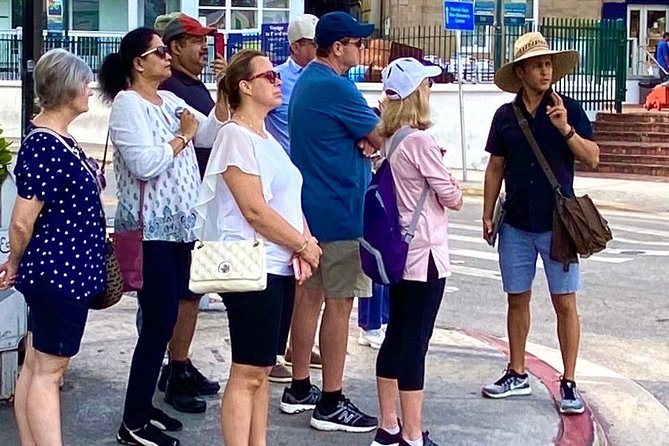
You’ll start at 716 Duval St, Key West, with the tour beginning at 11:30 am. The walk ends at Mary Ellen’s Bar & Restaurant, 420 Appelrouth Ln.
That end point is practical. You’re in an easy spot to grab a drink or meal after your tour, without having to reposition across town. Also, the tour is designed as a walking experience, so think of it as a guided route that sets you up for the rest of the afternoon.
Conch Republic: why Key West calls itself different
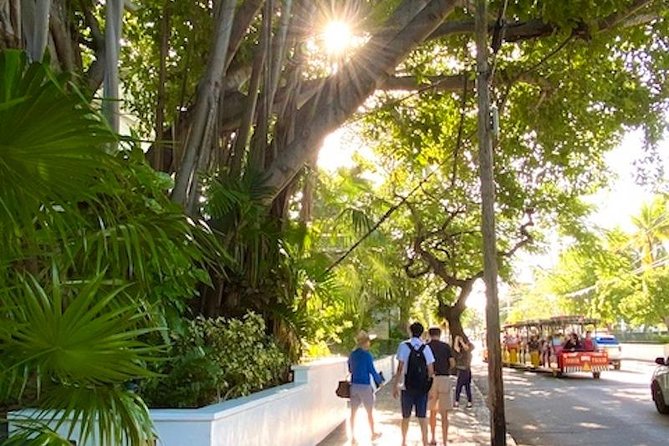
One stop is your quick crash course in why Key West is also known as the Conch Republic, and who counts as a Conch. This isn’t just trivia. It’s the key to understanding the island’s humor, pride, and how locals talk about outsiders.
When you hear the backstory, you start to notice the tone everywhere: the way people handle politics, identity, and tourism. It also makes the historic streets feel less like a museum and more like a living argument the island has been having with itself and the mainland for a long time.
Bahama Village stories you can actually use while walking
The tour’s focus includes Historic Bahama Village, and the storytelling tends to emphasize how different communities shaped the neighborhoods over time. In plain terms, you’ll learn to connect what you see on the street to why it’s there.
What I like about this approach is that it doesn’t require a history degree. When the guide explains early Cuban and Bahamian cultural influences, then ties that into the growth of neighborhoods and architecture, you stop treating the buildings as scenery. You start reading them like clues.
And because the group is small, you can ask the follow-up question that’s on your mind, not just wait for the last person’s question to get answered.
The pool stop: one landmark detail that changes how you picture the island
At another point, the guide explains why there is one of the largest pools on the property, and who built it. You might be tempted to think a pool is just a resort feature. Here, it becomes a lens for understanding the island’s development—how wealthy projects, tourism, and property history intersected with local life.
This is one of those stops that works especially well if you’ve never taken time to connect Key West’s “pretty” parts to the money and planning behind them.
More of the island story, up close



A tall maritime landmark since 1825: ships, trade, and architecture
Next comes a striking symbol of Key West’s maritime past: a tall structure standing since 1825. The guide frames it with the island’s shipping story and the iconic architecture that grew out of that maritime identity.
If you’ve ever wondered why Key West feels so tied to the sea even when you’re nowhere near a dock, this stop helps. Maritime history shows up not just in boats, but in how money moved, how buildings were designed, and how the island built its public face.
This is also the kind of stop where a good guide matters. The difference between seeing a historic structure and understanding it often comes down to a few clear facts delivered in the right order.
Green Parrot Bar on Duval: from grocery store to dive-bar legend
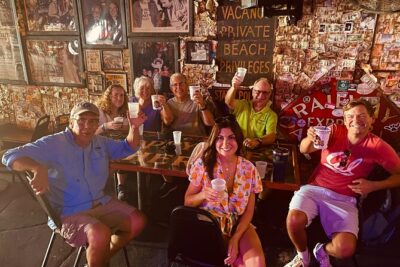
As you pass Green Parrot Bar, you get the backstory: it dates to 1890, when it started as a grocery store before becoming one of Key West’s beloved dive bars. The guide also connects it to the bar’s laid-back reputation, live music, and quirky decor.
This is a smart choice for a historic walking tour because it gives you a living example. You’re not just learning about the past in theory—you’re watching a place that has kept playing a role. Even if you’re not a bar person, the lesson here is that Key West history isn’t only in grand buildings. It’s in everyday spots where community forms.
Also, since the tour ends back in the bar-and-restaurant zone near Mary Ellen’s, you can keep the momentum going without scrambling for your next move.
What makes this tour work: the guide, the pace, and the Q&A
The tour is limited to a maximum of 12 travelers, and that cap shows up in how the experience feels. You’re not squeezed into a long line. You get time to hear the explanation, and you can ask what you actually care about.
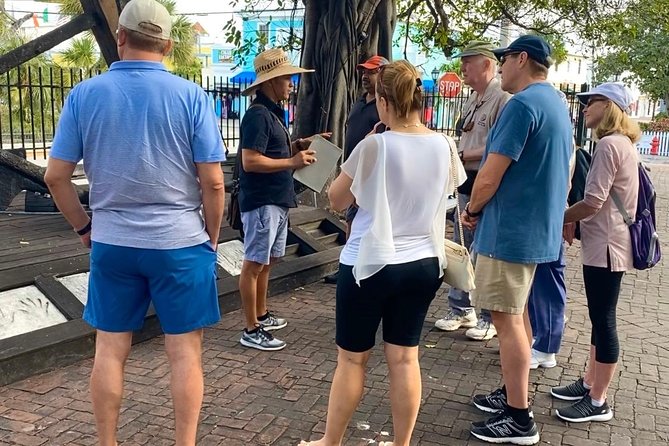
Guides like AJ and Alejandro come up repeatedly, and one consistent theme is how they support the talk with photos and historical images on a tablet as you walk. That turns “old houses” from vague charm into something more concrete: why a neighborhood grew, why certain design choices happened, and what cultural threads influenced it.
Another plus from the style of the guides: they encourage questions. If something doesn’t make sense—like why a street looks a certain way or how a landmark fits into the broader story—you’re likely to get a direct answer instead of a quick brush-off.
Distance, heat, and comfort tips that keep it enjoyable
The tour requires moderate physical fitness and includes the ability to walk 1.4–1.8 miles at a moderate pace in warm weather. That’s not extreme, but it is long enough that you should plan like you’re going out for a brisk neighborhood walk, not a leisurely stroll.
A few practical notes:
- Bring shoes you can trust on uneven sidewalks.
- Start hydrated, and bring water if you can.
- Ponchos are provided if it rains, but you should still bring a rain plan for your belongings.
- The big planning item: there are no restrooms during the tour. If you need a break, use the time before you start and consider a stop right at the end.
If you want a comfortable experience, aim for the cooler end of the day when you can—this one starts at 11:30 am, so you’ll want to treat the sun seriously.
Value check: is $46.99 worth it?
At $46.99 per person for about 1.5 hours, this is priced like a guided walking tour with real storytelling built in. What makes the price feel fair is what you’re getting alongside the route:
- a local guide who connects neighborhoods and landmarks to context
- tablet photo support that helps you understand what you see
- a small group format that keeps it personal
- ponchos provided if weather turns
What’s not included is also clear: food and drinks aren’t part of the tour, and restrooms aren’t available, so you’ll want to plan your own comfort needs. When you factor those in, this still works as good value because the tour makes your next hours in Key West easier. You’ll walk away with a mental map of why the Historic District feels like it does.
Who should book this tour (and who might skip it)
You’ll likely love this if you want:
- a guided intro to Key West that goes beyond Duval Street
- practical history you can connect to what you see later
- a small-group feel with time for questions
- neighborhood context like Bahama Village and cultural influences
You might choose something else if:
- you hate walking in heat and you don’t want a structured route
- you strongly need restroom stops during activities
- you only want the absolute biggest-name photo stops and nothing more
Should you book Key West Historic Bahama Village & Hemingway Heritage?
I’d book it if you want the most efficient way to understand Key West in a short window. The small group size, tablet photo storytelling, and the mix of identity (Conch Republic), neighborhood context (Bahama Village and cultural influences), and landmark history (including the 1825 maritime structure and Green Parrot Bar since 1890) make this more than a simple walk.
If you’re okay with 1.4–1.8 miles and you plan for no restrooms, this is a smart, high-value way to start seeing Key West the way locals do.
FAQ
How long is the tour?
It lasts about 1 hour 30 minutes.
How much does the tour cost?
The price is $46.99 per person.
Where does the tour start?
It starts at 716 Duval St, Key West, FL 33040, and the start time is 11:30 am.
Where does the tour end?
It ends at Mary Ellen’s Bar & Restaurant, 420 Appelrouth Ln, Key West, FL 33040.
What’s included in the tour price?
Included: a local guide, a bike rack on site, and ponchos provided if it’s raining.
Is food, drinks, or restroom access included?
No. Food & drinks aren’t included, and there are no restrooms on the tour.
What are the walking and weather requirements?
You should have a moderate physical fitness level and be able to walk 1.4 to 1.8 miles at a moderate pace in warm weather. The tour requires good weather.
History Around Key West

More Key West Tour Reviews





More of Old Town on Foot



Fresh Off the Dock: The Newest Key West Reviews











Hemingway & Old Town History Walks, compared.
 ★ 5.0Southernmost Food & Cultural Walking Tour by Key West Food ToursFrom $901,730 reviews
 ★ 5.0Key West Historic Seaport Food & Walking TourFrom $93642 reviews
 ★ 4.5Harry S Truman Little White House AdmissionFrom $25451 reviews
 ★ 4.5Jimmy Buffett TourFrom $79291 reviews
 ★ 4.5The Ghosts of Key West Walking Tour132 reviews
 ★ 4.9Cuban and Caribbean Food and Cultural Walking TourFrom $90128 reviews
 ★ 5.0Southernmost Key West History and Culture Small-Group Walking TourFrom $39124 reviews
 ★ 4.5Hemingway Food and Walking TourFrom $99105 reviews
Browse the lists this tour appears in